Inspection Guidelines
Shoving of Asphalt Pavement by PCC Slabs
PCC pavements occasionally increase in length at ends where they adjoin flexible pavements (commonly referred to as "pavement growth"). This "growth" shoves the asphalt- or tar-surfaced pavements, causing them to swell and crack. The PCC slab "growth" is caused by a gradual opening of the joints as they are filled with incompressible materials that prevent them from reclosing.
How to Measure
Shoving is measured by determining the area in square feet (square meters) of the swell caused by shoving.
| Severity | Distress Example | Description |
|---|---|---|
| Low | 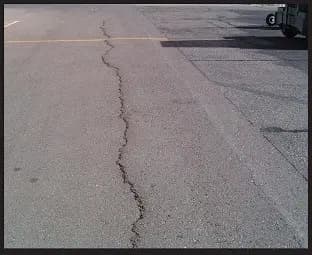 | A slight amount of shoving has occurred, with little effect on ride quality and no break-up of the asphalt pavement. |
| Medium | 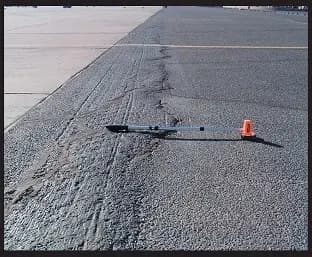 | A significant amount of shoving has occurred, causing moderate roughness or break-up of the asphalt pavement. |
| High | 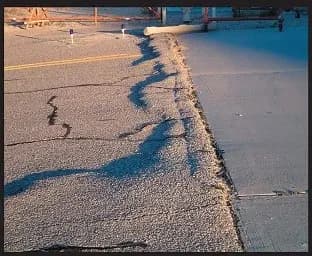 | A large amount of shoving has occurred, causing severe roughness or break-up of the asphalt pavement. |