Inspection Guidelines
Corrugation
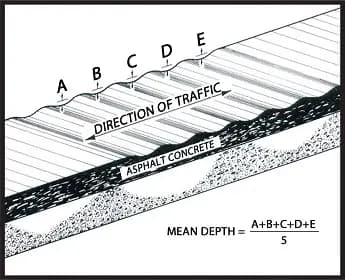
Corrugation is a series of closely spaced ridges and valleys (ripples) occurring at fairly regular intervals, usually less than 5 feet (1.5 meters) along the pavement. The ridges are perpendicular to the traffic direction. Traffic action combined with an unstable pavement surface or base usually causes this type of distress.
How to Measure
Corrugation is measured in square feet (square meters) of surface area. The mean elevation difference between the ridges and valleys of the corrugations indicates the level of severity. To determine the mean elevation difference, a 10 feet (3 meters) straightedge should be placed perpendicular to the corrugations so that the depth of the valleys can be measured in millimeters (inches). The mean depth is calculated from five such measurements.
| Severity | Distress Example | Description |
|---|---|---|
| Low | Corrugations are minor and do not significantly affect ride quality (see measurement criteria below). Runways and High-Speed Taxiways: < 1/4 inch (< 6.4 mm) Taxiways and Aprons: <1/2 inch (< 12.7 mm) | |
| Medium | Corrugations are noticeable and significantly affect ride quality (see measurement criteria below). Runways and High-Speed Taxiways: 1/4 – 1/2 inch (6.4 – 12.7 mm) Taxiways and Aprons: 1/2 – 1 inch (12.7 – 25.4 mm) | |
| High | Corrugations are easily noticed and severely affect ride quality (see measurement criteria below). Runways and High-Speed Taxiways: > 1/2 inch (> 12.7 mm) Taxiways and Aprons: > 1 inch (> 25.4 mm) |