Inspection Guidelines
Rutting
A rut is a surface depression in the wheel path. Pavement uplift may occur along the sides of the rut; however, in many instances ruts are noticeable only after a rainfall, when the wheel paths are filled with water. Rutting stems from a permanent deformation in any of the pavement layers or subgrade. It is usually caused by consolidation or lateral movement of the materials due to traffic loads. Significant rutting can lead to major structural failure of the pavement.
How to Measure
Rutting is measured in square feet (square meters) of surface area, and its severity is determined by the depth of the rut. To determine the rut depth, a straightedge should be laid across the rut and the maximum depth measured.
| Severity | Distress Example | Description |
|---|---|---|
| Low | 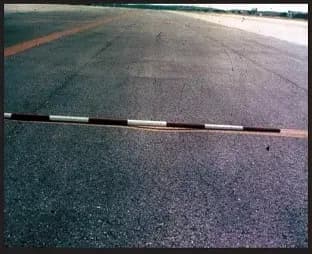 | 1/4 to 1/2 inch (6 to 13 millimeters) |
| Medium | 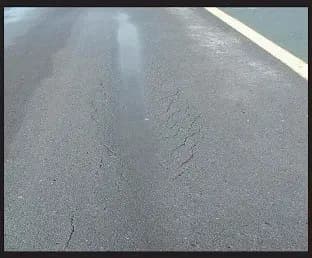 | 1/2 to 1 inch (13 to 25 millimeters) |
| High |  | > 1 inch > (25 millimeters) |