Inspection Guidelines
Raveling - Slurry Seal or Coal Tar Over Dense Mix
Raveling is the dislodging of coarse aggregate particles from the pavement surface. As used herein, coarse aggregate refers to predominant coarse aggregate sizes of the asphalt mix. Aggregate clusters refer to when more than one adjoining coarse aggregate piece is missing. If in doubt about a severity level, three representative areas of 1 square yard (1 square meter) each should be examined and the number of missing coarse aggregate particles counted.
How to Measure
Raveling is measured in square feet (square meters) of surface area. Mechanical damage caused by hook drags, tire rims, or snowplows is counted as areas of high severity raveling.
| Severity | Distress Example | Description |
|---|---|---|
| Low | 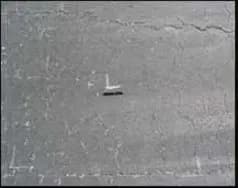 | (1) The scaled area is less than 1 percent. (2) In the case of coal tar where pattern cracking has developed, the surface cracks are less than 1/4 inch (6 mm) wide. |
| Medium | 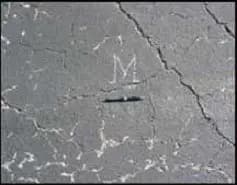 | (1) The scaled area is between 1 and 10 percent. (2) In the case of coal tar where pattern cracking has developed, the cracks are 1/4 inch (6 mm) wide or greater. |
| High | 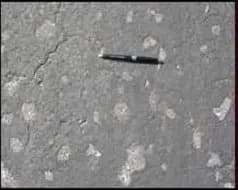 | (1) The scaled area is over 10 percent. (2) In the case of coal tar the surface is peeling off. |