Inspection Guidelines
Bleeding
Bleeding is a ?lm of bituminous material on the pavement surface which creates a shiny, glass-like, reflecting surface that usually becomes quite sticky. Bleeding is caused by excessive amounts of asphalt cement or tars in the mix and/ or low air-void content. It occurs when asphalt fills the voids of the mix during hot weather and then expands onto the surface of the pavement. Since the bleeding process is not reversible during cold weather, asphalt or tar will accumulate on the surface.
How to Measure
Bleeding is measured in square feet (square meters) of surface area. If bleeding is counted, polished aggregate is not counted in the same area.
| Severity | Distress Example | Description |
|---|---|---|
| Standard | 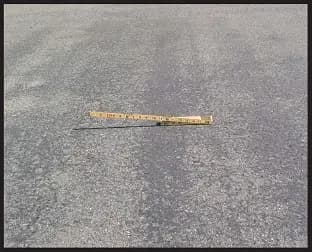 | No degrees of severity are defined. Bleeding should be noted when it is extensive enough to cause a reduction in skid resistance. |