Inspection Guidelines
Blowup
Blowups occur in hot weather, usually at a transverse crack or joint that is not wide enough to permit expansion by the concrete slabs. The insufficient width is usually caused by infiltration of incompressible materials into the joint space. When expansion cannot relieve enough pressure, a localized upward movement of the slab edges (buckling) or shattering will occur in the vicinity of the joint. Blowups can also occur at utility cuts and drainage inlets. This type of distress is almost always repaired immediately because of severe damage potential to aircraft. Blowups are included for reference when closed sections are being evaluated for reopening.
How to Count
A blowup usually occurs at a transverse crack or joint. At a crack, it is counted as being in one slab, but at a joint, two slabs are affected and the distress should be recorded as occurring in two slabs. (Note: For pavements to be considered operational, all foreign material from blowups must have been removed.)
| Severity | Distress Example | Description |
|---|---|---|
| Low | 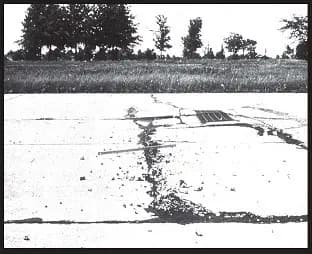 | Buckling or shattering has not rendered the pavement inoperative, and only a slight amount of roughness exists. |
| Medium | 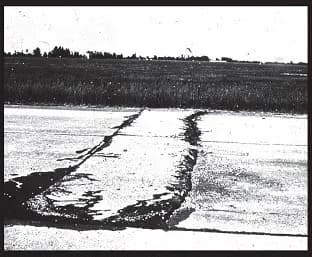 | Buckling or shattering has not rendered the pavement inoperative, but a significant amount of roughness exists. |
| High | 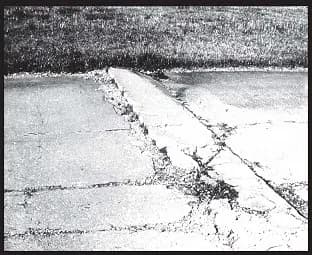 | Buckling or shattering has rendered the pavement inoperative. |