Inspection Guidelines
Joint Seal Damage
Joint seal damage is any condition which enables soil or rocks to accumulate in the joints or allows significant infiltration of water. Accumulation of incompressible materials prevents the slabs from expanding and may result in buckling, shattering, or spalling. A pliable joint filler bonded to the edges of the slabs protects the joints from accumulation of materials and also prevents water from seeping down and softening the foundation supporting the slab. Typical types of joint seal damage are (a) stripping of joint sealant, (b) extrusion of joint sealant, (c) weed growth, (d) hardening of the filler (oxidation), (e) loss of bond to the slab edges, and (f) lack or absence of sealant in the joint.
How to Count
Joint seal damage is not counted on a slab-by-slab basis but is rated based on the overall condition of the sealant in the sample unit.
| Severity | Distress Example | Description |
|---|---|---|
| Low |  | Joint sealer is in generally good condition throughout the section. Sealant is performing well, with only a minor amount of any of the above types of damage present. |
| Medium | 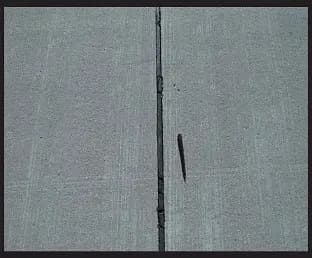 | Joint sealer is in generally fair condition over the entire surveyed section, with one or more of the above types of damage occurring to a moderate degree. Sealant needs replacement within 2 years. |
| High | 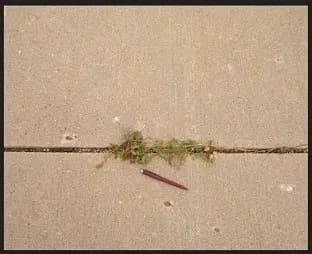 | Joint sealer is in generally poor condition over the entire surveyed section, with one or more of the above types of damage occurring to a severe degree. Sealant needs immediate replacement. |