Inspection Guidelines
Shattered Slab - Intersecting Cracks
Intersecting cracks are cracks that break into four or more pieces because of overloading and/or inadequate support. The high-severity level of this distress type, as defined below, is referred to as a shattered slab. If all pieces or cracks are contained within a corner break, the distress is categorized as a severe corner break.
How to Count
No other distress such as scaling, spalling, or durability cracking should be recorded if the slab is medium- or high-severity level, since the severity of this distress would affect the slab's rating substantially.
| Severity | Distress Example | Description |
|---|---|---|
| Low | 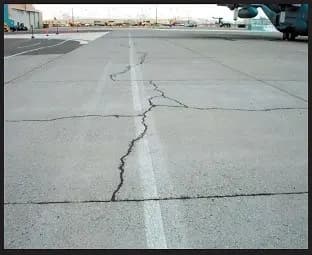 | Slab is broken into four or five pieces with the vast majority of the cracks (over 85 percent) of low-severity. |
| Medium | 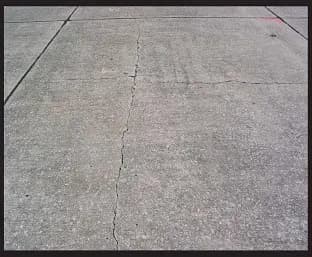 | (1) Slab is broken into four or five pieces with over 15 percent of the cracks of medium severity (no high-severity cracks); or (2) slab is broken into six or more pieces with over 85 percent of the cracks of low-severity. |
| High | 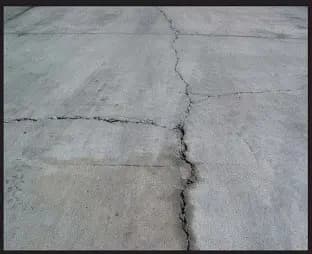 | At this level of severity, the slab is called shattered: (1) slab is broken into four or five pieces with some or all of the cracks of high severity; (2) slab is broken into six or more pieces with over 15 percent of the cracks of medium- or high-severity. |