Inspection Guidelines
Popouts
A popout is a small piece of pavement that breaks loose from the surface due to freeze-thaw action in combination with expansive aggregates. Popouts usually range from approximately 1 inch (25 millimeters) to 4 inches (100 millimeters) in diameter and from 1/2 inch (13 millimeters) to 2 inches (50 millimeters) deep.
How to Count
The density of the distress must be measured. If there is any doubt about the average being greater than three popouts per square yard (per square meter), at least three, random, 1 square meter (1 square yard) areas should be checked. When the average is greater than this density, the slab is counted.
| Severity | Distress Example | Description |
|---|---|---|
| Standard | 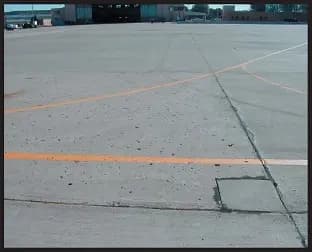 | No degrees of severity are defined for popouts. However, popouts must be extensive before they are counted as a distress; i.e., average popout density must exceed approximately three popouts per square yard over the entire slab area. |